
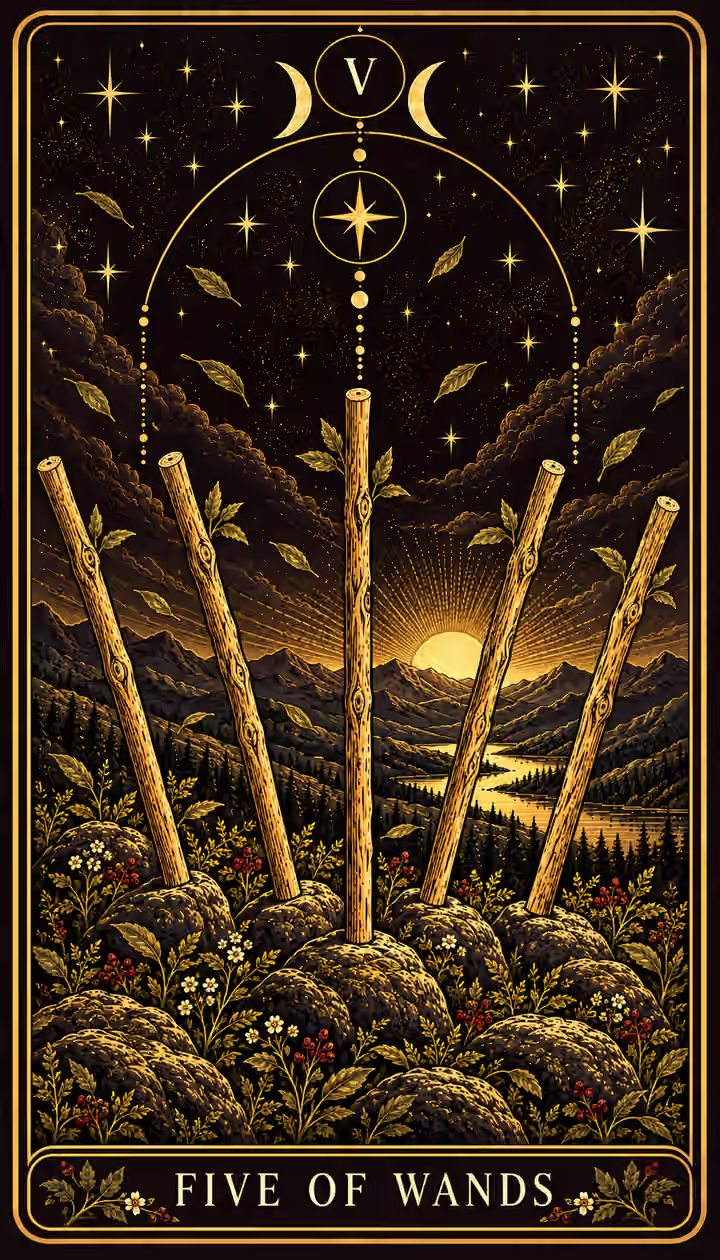
Five of Wands from the Gilded Garden deck
The Gilded Garden · Upright

WANDS · FIVE

Five of Wands

Clashing egos: competition and infighting where there should be teamwork.

FireNumber five

UPRIGHT

Competition, infighting, rivalry

REVERSED

Reconciliation, conflict ends, new opportunities

Draw the Five of Wands into a reading

THE MEANING

What does the Five of Wands mean in tarot?

The Five of Wands is a Minor Arcana card in the suit of Wands, linked with Fire. Upright, it describes competition and friction: rivalry, clashing egos or inner conflict where cooperation would serve everyone better. Reversed, the Five of Wands often points to a struggle easing, a rivalry settled and the chance to move forward again.

Is the Five of Wands a positive card?

The Five of Wands is a mixed card: it can sharpen your skills and test your resolve, but it also wastes energy in conflict. Its caution is to choose your contests, and reversed it often signals that the struggle is easing.

Is the Five of Wands a yes or no card?

Upright: leans noReversed: leans yes

The Five of Wands leans no when upright, because it describes friction, rivalry and effort spent on conflict rather than progress, so the way forward looks crowded for now. Reversed, the Five of Wands often leans yes: the struggle is easing and cooperation becomes possible again. The caution is that a quarrel smoothed over rather than settled can return, and the lean depends on whether the contest is worth having at all.

FIVE OF WANDS AT A GLANCE
ArcanaMinor Arcana
SuitWands (Fire)
Number5
Uprightcompetition, infighting, rivalry, clash of egos
Reversedreconciliation, conflict ends, new opportunities, prevailing over rivals

UPRIGHT AND REVERSED

Two ways the Five of Wands can fall

A reversed card is read as blocked, inward or delayed energy, never simply as its opposite.

AS IT FALLS

The Five of Wands upright

Upright, the Five of Wands describes energy spent sideways. Many people want to be heard at once, and instead of building together they jostle over credit, position or direction. The card often appears in competitive fields or teams where ambition has turned into scuffling, and it can raise a fair question about who is truly an ally. It can also describe a crowd inside one person: several goals pulling against each other until nothing moves. The Five of Wands is not necessarily hostile, and some contests sharpen skill. Its concern is with friction that stalls progress. What it asks of you is to notice where rivalry has replaced purpose, and to turn competitive heat back toward the work itself.

  • competition
  • infighting
  • rivalry
  • clash of egos
  • envy
  • inner conflict
  • stagnation
AS ADVICE
Channel the competition into the work itself.
AS A CHALLENGE
Infighting is stalling progress.

TURNED OVER

The Five of Wands reversed

Reversed, the Five of Wands frequently reads as a positive turn: the noise begins to settle. A period of infighting or rivalry may be winding down, either because you have proved your point and found your place, or because the contest has simply lost its heat. The card suggests reconciliation, a return to useful work, and space for new openings that the conflict was crowding out. Inwardly, it can describe competing priorities finally finding an order. Still, the reversed Five of Wands carries a small caution. Old quarrels that are papered over rather than resolved can flare again, so it points toward making peace properly, naming what was at stake, and agreeing on what comes next.

  • reconciliation
  • conflict ends
  • new opportunities
  • prevailing over rivals
AS ADVICE
Make peace and get back to work.
AS A CHALLENGE
Old rivalries may flare if not settled properly.

IN YOUR LIFE

The Five of Wands in love, work and the inner life

The Five of Wands in love

The Five of Wands in love suggests bickering, competing priorities or small power contests that slowly wear on closeness and goodwill. Reversed, the Five of Wands can describe making up after a run of quarrels, and the relief of being on the same side again after a tense stretch.

The Five of Wands at work

The Five of Wands in work points toward a competitive environment, ego clashes or a team pulling hard in several different directions. Reversed, the Five of Wands can describe a rivalry settling, a dispute resolved, and progress resuming once everyone’s energy returns to the shared task.

Five of Wands by area of life, upright and reversed
UPRIGHTREVERSED
Love and relationshipsUPRIGHTPetty arguments; competing priorities.REVERSEDMaking up after quarrels.
Work and purposeUPRIGHTWorkplace competition and ego clashes.REVERSEDRivalry settled; progress resumes.
The inner lifeUPRIGHTInner conflict about goals.REVERSEDInner peace restored.

THE GILDED GARDEN

The Five of Wands in this deck

In the Gilded Garden deck, the Five of Wands shows five leafing staffs planted in five separate mounds of earth and fanned apart, two leaning left, two leaning right and one upright between them. None touches another. Loose leaves blow across a cloudy night sky, and a low sun sits beyond the mountains and a winding river. The staffs suggest competing directions held in tension, and the scattered leaves suggest energy spent in the pull between them.

IN A SPREAD

How to read the Five of Wands in a spread

In the present position, the Five of Wands often describes tension, competition or mixed aims. As a challenge, it can point to infighting that stalls progress. As advice, it asks you to channel rivalry into the work. Near an outcome, it suggests a contest still being settled. Beside other Wands, it raises the heat; beside the Majors, it can show friction inside a larger change.

TO SIT WITH

Who here is actually your rival, and who is your ally?

Which of your own goals are fighting each other?

KINDRED CARDS

How the Five of Wands differs from similar cards

IN THE LIBRARY

IN A READING

A meaning is where a reading begins.

In a spread, the Five of Wands speaks through its position, its neighbours and the question you bring. The companion shows you how, and why.

Get the iPhone app

About these meanings: they are written by the TarotSeeker editors from the traditional Rider–Waite–Smith meanings and the Golden Dawn correspondences, read through the elemental method the companion uses in readings. They are starting points for reflection, never predictions.