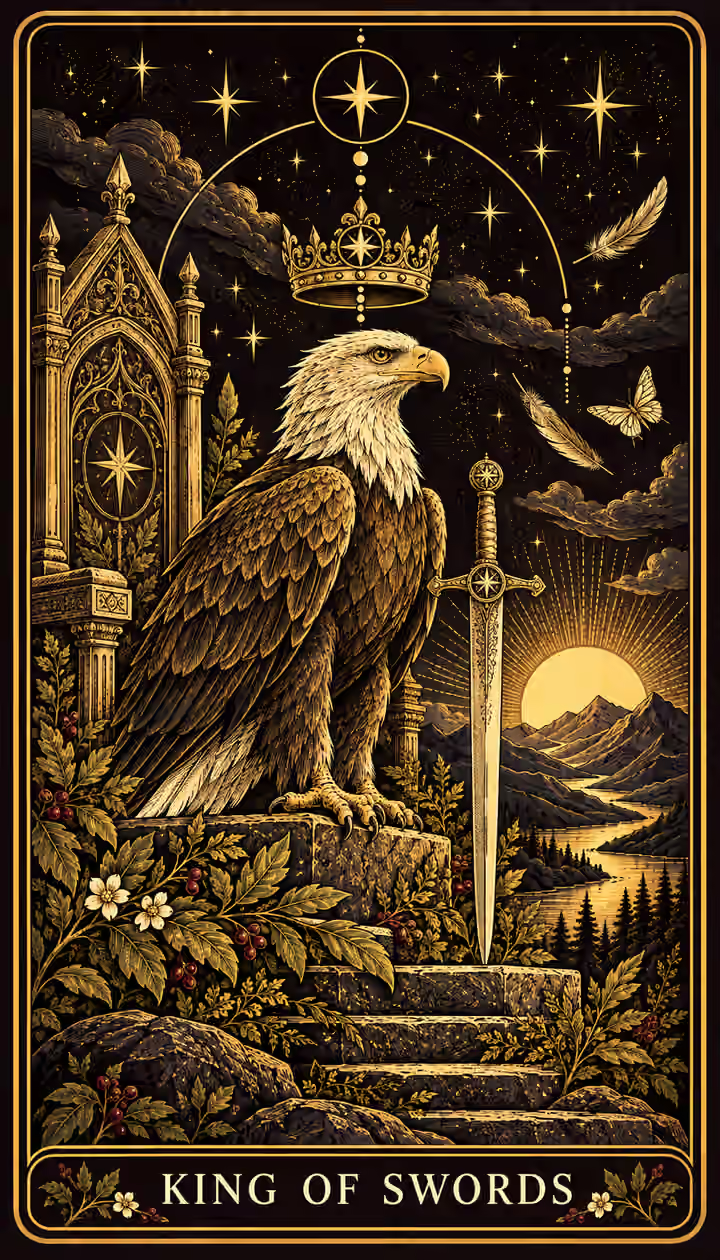
King of Swords from the Gilded Garden deck
The Gilded Garden · Upright

SWORDS · KING

King of Swords

Intellect with authority: stern, disciplined, fair-minded, and rigid.

AirCourt card

UPRIGHT

Authority, intellect, discipline

REVERSED

Ruthlessness, malice, ulterior motives

Draw the King of Swords into a reading

THE MEANING

What does the King of Swords mean in tarot?

The King of Swords is a Minor Arcana court card in the suit of Swords, linked with Air. Upright, it stands for intellectual authority: disciplined judgement, analytical clarity and decisions grounded in principle. Reversed, the King of Swords suggests that authority has lost its integrity, with cold calculation, hidden motives or ambition serving only itself.

Is the King of Swords a positive card?

The King of Swords is a largely positive card, a sign of clear thinking, integrity and wise authority. Its caution concerns rigidity and detachment, and reversed, it warns against intellect serving hidden or self-serving aims.

Is the King of Swords a yes or no card?

Upright: leans yesReversed: leans no

The King of Swords leans yes when it falls upright, because it describes judgement at its most disciplined: decisions made from evidence, principle and fairness. The yes favours questions that a reasoned, impartial view can settle, and it may come with firm conditions. Reversed, the King of Swords leans no, since intellect has drifted from integrity toward hidden motives or cold calculation. It asks whose interests a decision truly serves.

KING OF SWORDS AT A GLANCE
ArcanaMinor Arcana
SuitSwords (Air)
RankKing, a court card
Uprightauthority, intellect, discipline, judgement
Reversedruthlessness, malice, ulterior motives, destructive ambition

UPRIGHT AND REVERSED

Two ways the King of Swords can fall

A reversed card is read as blocked, inward or delayed energy, never simply as its opposite.

AS IT FALLS

The King of Swords upright

Upright, the King of Swords describes judgement at its most disciplined. This card favours logic, evidence and principle, and it values fairness over sentiment. It can describe your own capacity for clear-headed decisions, an expert or counsellor whose advice is grounded and impartial, or effective leadership of your ambitions. The King of Swords is often a guardian of order and standards, firm with everyone and occasionally misunderstood for it. Its strength lies in seeing through confusion and deciding with integrity. Its risk is rigidity: a code applied so strictly that it forgets the people it was meant to serve, or a verdict that feels fair only from one side. The card asks you to think things through and decide from principle.

  • authority
  • intellect
  • discipline
  • judgement
  • analysis
  • counsel
  • integrity
AS ADVICE
Think it through and decide with integrity.
AS A CHALLENGE
Rigidity mistaken for fairness.

TURNED OVER

The King of Swords reversed

Reversed, the King of Swords suggests that intellect has become detached from integrity. Decisions may be driven by self-interest, hidden agendas or a cold calculation that disregards their effect on others. Authority can feel ruthless rather than fair. The reversal can describe your own ambitions turning self-serving, or an influence in your life that is manipulative or unaccountable. It may also point to cynicism, a loss of faith in fairness itself. The reversed King of Swords does not dismiss the value of reason. What it points toward is examining motives carefully, yours and others’, and making sure that clear thinking stays connected to honesty and to the wellbeing of those affected by your choices.

  • ruthlessness
  • malice
  • ulterior motives
  • destructive ambition
  • lack of integrity
AS ADVICE
Check the motives, yours and theirs.
AS A CHALLENGE
Cold calculation is replacing integrity.

IN YOUR LIFE

The King of Swords in love, work and the inner life

The King of Swords in love

The King of Swords in love can describe a principled, rational partner and frank, respectful communication, valuing honesty over drama. Reversed, the King of Swords suggests coldness, control or manipulation, and a need to ask whether reason is being used to avoid feeling rather than to understand it.

The King of Swords at work

The King of Swords in work points toward roles in law, analysis, strategy or expertise, and decisions based on evidence and principle. Reversed, the King of Swords can describe ruthless competition, hidden agendas or leadership that has lost sight of fairness and of the people it affects.

King of Swords by area of life, upright and reversed
UPRIGHTREVERSED
Love and relationshipsUPRIGHTA principled, rational partner; frank communication.REVERSEDColdness or manipulation.
Work and purposeUPRIGHTLaw, the military, analysis, expertise.REVERSEDRuthless competition; hidden agendas.
The inner lifeUPRIGHTClear thinking and principle.REVERSEDCynicism.

THE GILDED GARDEN

The King of Swords in this deck

In the Gilded Garden deck, the King of Swords is a bald eagle standing on a stone dais before a tall Gothic throne carved with a star. A golden crown set with another star hovers above its head, and a sword stands upright beside it, point resting on the steps. Feathers and a butterfly drift through the night sky, while the sun sets over a river valley. The eagle suggests a commanding, far-seeing view.

IN A SPREAD

How to read the King of Swords in a spread

In the present position, the King of Swords often describes a need for clear, impartial judgement. As a challenge, it can point to rigidity mistaken for fairness. As advice, it asks you to think things through and decide with integrity. Near an outcome, it suggests a reasoned resolution. Among other courts, the King of Swords brings authority and structure to the reading.

TO SIT WITH

Is this rule serving its purpose, or only itself?

What would a fair judgement look like if you weren’t in it?

KINDRED CARDS

How the King of Swords differs from similar cards

IN THE LIBRARY

IN A READING

A meaning is where a reading begins.

In a spread, the King of Swords speaks through its position, its neighbours and the question you bring. The companion shows you how, and why.

Get the iPhone app

About these meanings: they are written by the TarotSeeker editors from the traditional Rider–Waite–Smith meanings and the Golden Dawn correspondences, read through the elemental method the companion uses in readings. They are starting points for reflection, never predictions.