
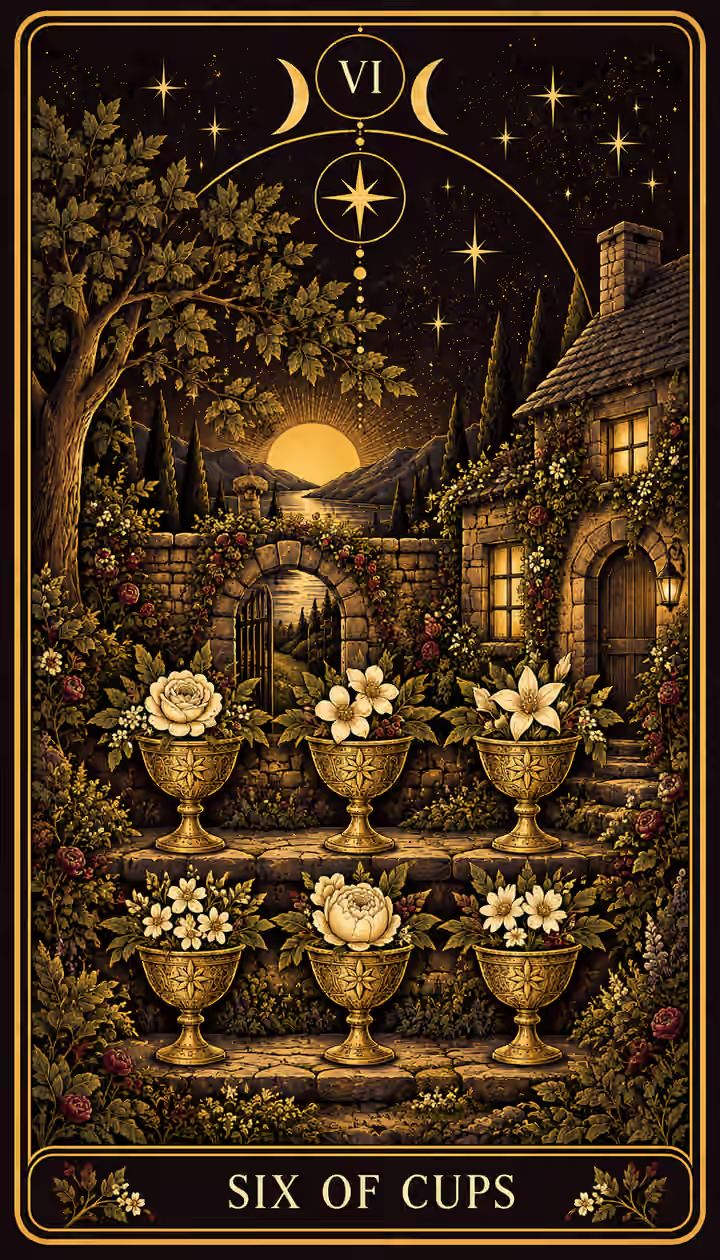
Six of Cups from the Gilded Garden deck
The Gilded Garden · Upright

CUPS · SIX

Six of Cups

Nostalgia: the past, mostly sweet, returning to the present.

WaterNumber six

UPRIGHT

Nostalgia, childhood, memories

REVERSED

Painful past, clinging to the past, unhappy memories

Draw the Six of Cups into a reading

THE MEANING

What does the Six of Cups mean in tarot?

The Six of Cups is a Minor Arcana card in the suit of Cups, linked with Water. Upright, it describes nostalgia: warm memories, childhood, innocence and someone or something from the past returning. Reversed, the Six of Cups suggests the past weighing on the present instead, through painful memories or a longing for how things used to be that makes moving forward difficult.

Is the Six of Cups a positive card?

The Six of Cups is a warm, generally positive card about good memories, kindness and reconnection. Its caution is about direction: nostalgia comforts, but when the card is reversed, it asks you to honour the past and then turn toward now.

Is the Six of Cups a yes or no card?

Upright: leans yesReversed: leans no

The Six of Cups leans yes upright, especially for questions about reconnection, because it describes warm memories, kindness and someone or something from the past returning. Reversed, the Six of Cups leans no, pointing to the past pulling rather than nourishing, or to a wish to recover how things used to be. The lean depends on direction: the past can comfort, but it rarely answers a question about the future by itself.

SIX OF CUPS AT A GLANCE
ArcanaMinor Arcana
SuitCups (Water)
Number6
Uprightnostalgia, childhood, memories, reunion
Reversedpainful past, clinging to the past, unhappy memories, longing for children

UPRIGHT AND REVERSED

Two ways the Six of Cups can fall

A reversed card is read as blocked, inward or delayed energy, never simply as its opposite.

AS IT FALLS

The Six of Cups upright

Upright, the Six of Cups describes the past as a living, mostly gentle presence. Memories of childhood, old friendships or earlier places come back with a sweetness that colours the present, and something good from before may return: a familiar person, an old interest, a feeling of simplicity you had misplaced. The card often invites you to draw on what nourished you once, whether that is kindness, play or a sense of belonging. When you are puzzling over a problem, the Six of Cups can suggest that its roots reach back further than you think, perhaps to early experiences that still shape your reactions. Children and family can be meaningful themes here. What it asks of you is to honour what was good in your history and carry its warmth into the life you are living now.

  • nostalgia
  • childhood
  • memories
  • reunion
  • innocence
  • children
  • the past returning
AS ADVICE
Draw on what was good in your past.
AS A CHALLENGE
Romanticising what used to be.

TURNED OVER

The Six of Cups reversed

Reversed, the Six of Cups suggests that the past is pulling rather than nourishing. You may be holding on to how things used to be, measuring the present against a memory it cannot match, or returning to old patterns because they feel familiar. Sometimes the card describes memories that are painful rather than sweet, a difficult early chapter whose influence is still felt. It can also describe a deep longing, for family, for children, or for a childhood that was not what it should have been. The reversed Six of Cups does not ask you to forget. What it points toward is a gentler relationship with your history: acknowledging what happened, grieving what needs grieving, and then turning your attention to the people and possibilities in front of you today.

  • painful past
  • clinging to the past
  • unhappy memories
  • longing for children
  • difficult childhood
AS ADVICE
Honour the past, then turn toward now.
AS A CHALLENGE
The past keeps pulling you backward.

IN YOUR LIFE

The Six of Cups in love, work and the inner life

The Six of Cups in love

The Six of Cups in love points toward tenderness and innocence, an old flame reappearing, or a relationship built on shared history and comfort. Reversed, the Six of Cups can describe living in the past, comparing a partner to someone earlier, or old hurts shaping a present bond.

The Six of Cups at work

The Six of Cups in work can describe a return to an earlier project, workplace or colleague, or work that draws on talents you had as a child. Reversed, the Six of Cups can describe old habits repeating, or attachment to how things used to be done holding progress back.

Six of Cups by area of life, upright and reversed
UPRIGHTREVERSED
Love and relationshipsUPRIGHTAn old flame; sweetness and innocence in love.REVERSEDLiving in the past.
Work and purposeUPRIGHTReturn to old projects or colleagues.REVERSEDOld patterns repeating.
The inner lifeUPRIGHTWarm memories.REVERSEDOld wounds.

THE GILDED GARDEN

The Six of Cups in this deck

In the Gilded Garden deck, the Six of Cups shows six golden cups set in two rows on the stone steps of a cottage garden, each one filled with pale roses, lilies or small white blossoms. Lamplight glows in the cottage windows, and an arched gate in the garden wall opens onto a lake at sunset. The flower-filled cups suggest memories kept with care, and the open gate a past you can still revisit.

IN A SPREAD

How to read the Six of Cups in a spread

In the present position, the Six of Cups often describes a nostalgic mood or a reconnection with someone from before. As a challenge, it can point to romanticising the past. As advice, it asks you to draw on what was good in your history. Near an outcome, it suggests something familiar returning in a new form. Beside other Cups, the Six of Cups deepens the emotional pull of memory; beside Major Arcana, it can suggest that old patterns belong to a larger turning.

TO SIT WITH

What from your past is asking to be remembered?

What would you need to let go of to move forward?

KINDRED CARDS

How the Six of Cups differs from similar cards

IN THE LIBRARY

IN A READING

A meaning is where a reading begins.

In a spread, the Six of Cups speaks through its position, its neighbours and the question you bring. The companion shows you how, and why.

Get the iPhone app

About these meanings: they are written by the TarotSeeker editors from the traditional Rider–Waite–Smith meanings and the Golden Dawn correspondences, read through the elemental method the companion uses in readings. They are starting points for reflection, never predictions.