
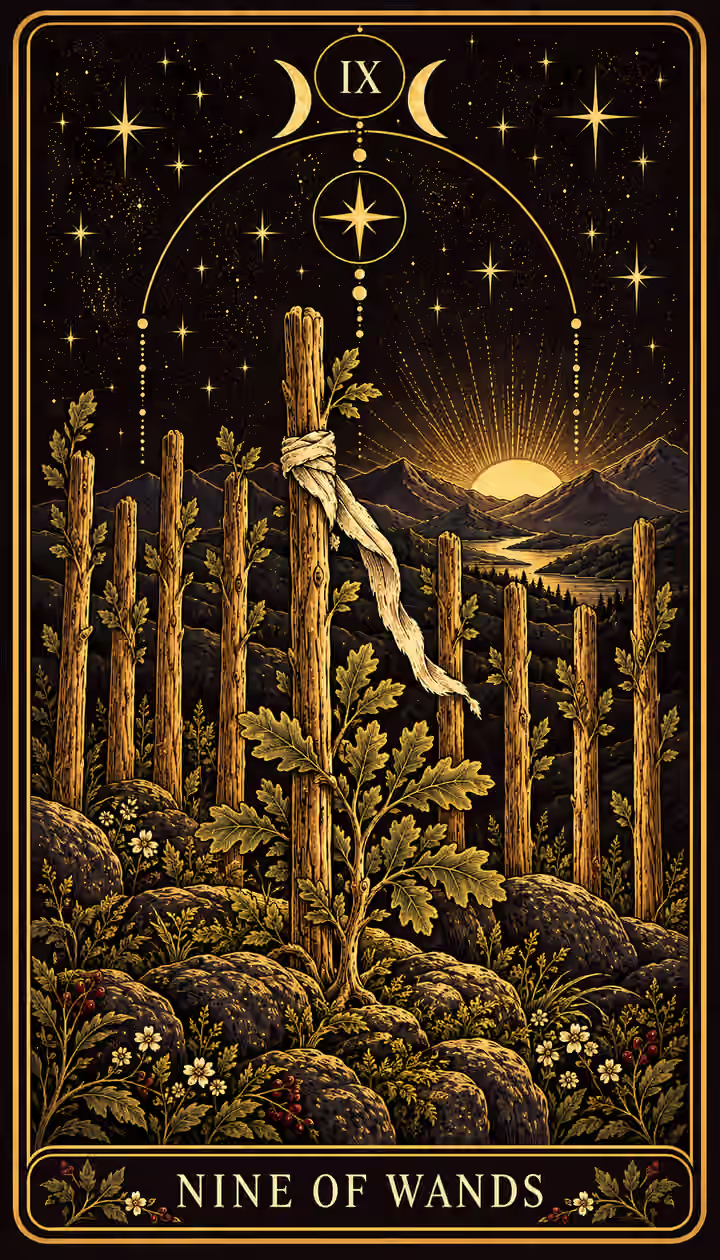
Nine of Wands from the Gilded Garden deck
The Gilded Garden · Upright

WANDS · NINE

Nine of Wands

Guarded and wounded, still standing: defence that has become a trap.

FireNumber nine

UPRIGHT

Defensiveness, resilience, guardedness

REVERSED

Collapse, depleted energy, near giving up

Draw the Nine of Wands into a reading

THE MEANING

What does the Nine of Wands mean in tarot?

The Nine of Wands is a Minor Arcana card in the suit of Wands, linked with Fire. Upright, it describes resilience and guardedness: still standing after hardship, but wary, worn and braced for the next blow. Reversed, the Nine of Wands points to exhaustion catching up, energy running low, and the need to rest or release what you have been guarding.

Is the Nine of Wands a positive card?

The Nine of Wands is a card of real strength, a sign that you have endured and are still standing. Its caution is about cost: constant vigilance drains energy, and reversed the card asks for rest before further effort.

Is the Nine of Wands a yes or no card?

Upright: leans yesReversed: leans no

The Nine of Wands leans yes upright, though it is a hard-won yes: the card shows someone still standing after long effort, with the strength for one more stretch. Reversed, the Nine of Wands leans no, because exhaustion has caught up and the position being defended may no longer deserve the cost. Its caution is rest, and asking whether persistence still serves the goal or only the habit of guarding it.

NINE OF WANDS AT A GLANCE
ArcanaMinor Arcana
SuitWands (Fire)
Number9
Uprightdefensiveness, resilience, guardedness, persistence
Reversedcollapse, depleted energy, near giving up, let go and move forward

UPRIGHT AND REVERSED

Two ways the Nine of Wands can fall

A reversed card is read as blocked, inward or delayed energy, never simply as its opposite.

AS IT FALLS

The Nine of Wands upright

Upright, the Nine of Wands describes persistence that has become a posture. You have come through real difficulty and kept going, which is no small thing, yet the card notices how much of your strength now goes into watching the perimeter. Fatigue may be present but unspoken, and help may be refused out of habit or pride. The Nine of Wands honours the resilience while questioning the cost: guarding what you hold can leave little room to reach for anything new, and the defences may not be as necessary as they feel. What it asks of you is to recognise that you need not hold the line alone, and to lower your guard far enough to let support, and possibility, come in.

  • defensiveness
  • resilience
  • guardedness
  • persistence
  • exhaustion denied
  • protecting territory
AS ADVICE
Lower your guard enough to ask for help.
AS A CHALLENGE
Self-protection has become self-limitation.

TURNED OVER

The Nine of Wands reversed

Reversed, the Nine of Wands suggests that the tiredness has stopped waiting politely. After a long stretch of vigilance, the inner fire may feel low, and the sense of defending your ground against everything can tip toward wanting to give up. The card does not treat that as failure. It points toward a different approach: rest first, then ask whether everything you have been protecting still deserves the effort. Sometimes the wiser move is to let go of an old position and step forward into fresh territory, rather than standing guard over the past. The reversed Nine of Wands invites recovery, honest reassessment, and active re-engagement with life once some strength has returned.

  • collapse
  • depleted energy
  • near giving up
  • let go and move forward
  • burnout
AS ADVICE
Rest, then go forward instead of standing guard.
AS A CHALLENGE
Fighting to keep what may need letting go.

IN YOUR LIFE

The Nine of Wands in love, work and the inner life

The Nine of Wands in love

The Nine of Wands in love suggests guardedness after past hurt: care is there, but trust is offered slowly and with conditions. Reversed, the Nine of Wands can describe emotional exhaustion, or a readiness to stop fighting for a dynamic that has asked too much.

The Nine of Wands at work

The Nine of Wands in work points toward perseverance under pressure, defending your role or seeing a demanding stretch through to the end. Reversed, the Nine of Wands can describe burnout, a sign to rest and reconsider which responsibilities you truly need to keep carrying.

Nine of Wands by area of life, upright and reversed
UPRIGHTREVERSED
Love and relationshipsUPRIGHTGuardedness from past hurt.REVERSEDEmotional exhaustion; ready to give up.
Work and purposeUPRIGHTPerseverance under pressure; defending your role.REVERSEDBurnout.
The inner lifeUPRIGHTResilience.REVERSEDDepletion.

THE GILDED GARDEN

The Nine of Wands in this deck

In the Gilded Garden deck, the Nine of Wands shows a palisade of eight staffs standing in a line across a dark hillside, with a ninth in front, its top bound with a pale bandage whose end trails in the wind. A young oak grows at its base among rocks and berries, and a sun sets over the hills. The bandage suggests old injury, and the sapling suggests that growth continues behind the defences.

IN A SPREAD

How to read the Nine of Wands in a spread

In the present position, the Nine of Wands often describes a wary, tired resilience. As a challenge, it can point to self-protection that limits you. As advice, it asks you to accept help and ease your guard. Near an outcome, it suggests endurance rather than triumph. Beside other Wands, it signals long effort; beside the Majors, it shows how a larger trial has been weathered.

TO SIT WITH

What are you guarding, and is it still worth it?

Who could you let help you?

KINDRED CARDS

How the Nine of Wands differs from similar cards

IN THE LIBRARY

IN A READING

A meaning is where a reading begins.

In a spread, the Nine of Wands speaks through its position, its neighbours and the question you bring. The companion shows you how, and why.

Get the iPhone app

About these meanings: they are written by the TarotSeeker editors from the traditional Rider–Waite–Smith meanings and the Golden Dawn correspondences, read through the elemental method the companion uses in readings. They are starting points for reflection, never predictions.