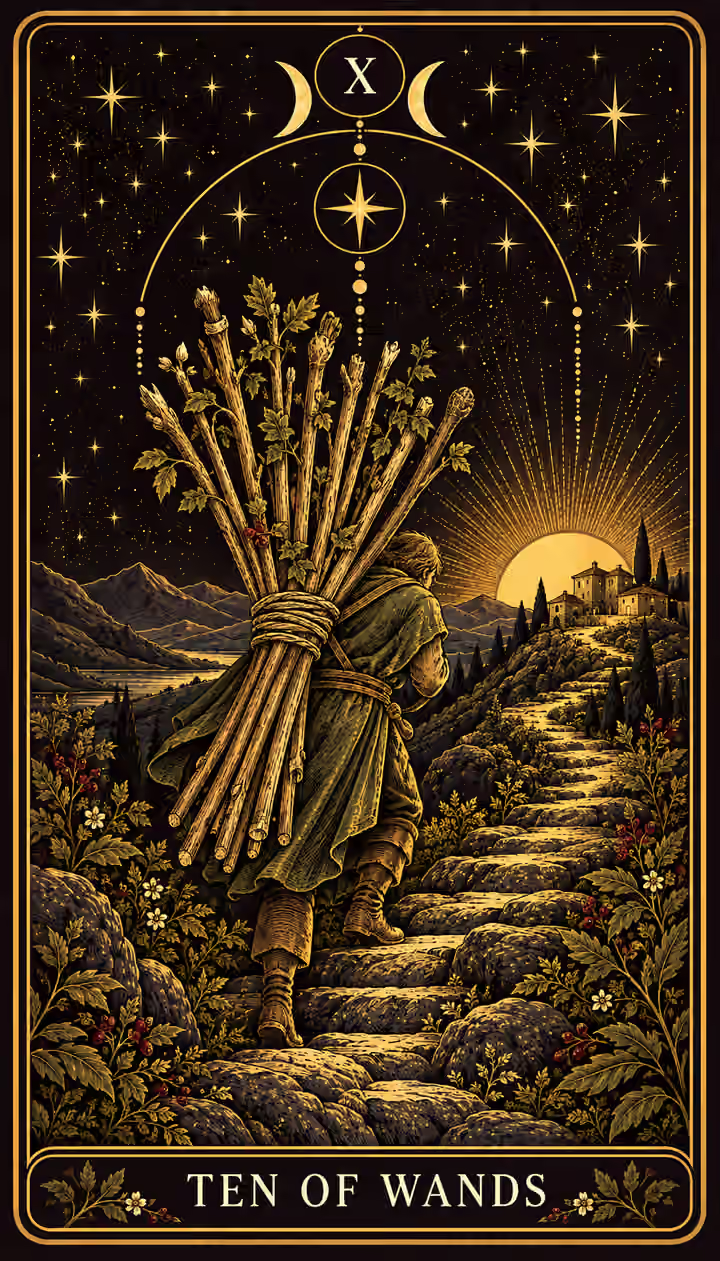
Ten of Wands from the Gilded Garden deck
The Gilded Garden · Upright

WANDS · TEN

Ten of Wands

An oppressive load, mostly other people’s, that blocks the view of your own path.

FireNumber ten

UPRIGHT

Burden, overcommitment, responsibility

REVERSED

Breaking point, overwhelmed, must prioritise

Draw the Ten of Wands into a reading

THE MEANING

What does the Ten of Wands mean in tarot?

The Ten of Wands is a Minor Arcana card in the suit of Wands, linked with Fire. Upright, it describes a heavy load: overcommitment, responsibilities taken on for others, and hard work that obscures the original purpose. Reversed, the Ten of Wands points to a breaking point, where priorities must be sorted and some burdens set down.

Is the Ten of Wands a positive card?

The Ten of Wands is a demanding card, though not a bleak one: it shows strength, duty and a goal within reach. Its caution is about overload, and reversed it asks you to prioritise before exhaustion decides for you.

Is the Ten of Wands a yes or no card?

Upright: depends on the questionReversed: leans no

The Ten of Wands gives an answer that depends on the question when upright, because it shows a goal within reach under a heavy load: it can lean yes to finishing what you carry and no to taking on more. Reversed, the Ten of Wands leans no, pointing to a breaking point where some burdens need setting down first. Its condition is triage, deciding which loads actually serve the goal.

TEN OF WANDS AT A GLANCE
ArcanaMinor Arcana
SuitWands (Fire)
Number10
Uprightburden, overcommitment, responsibility, carrying others
Reversedbreaking point, overwhelmed, must prioritise, minutiae

UPRIGHT AND REVERSED

Two ways the Ten of Wands can fall

A reversed card is read as blocked, inward or delayed energy, never simply as its opposite.

AS IT FALLS

The Ten of Wands upright

Upright, the Ten of Wands describes a weight carried with determination but not without cost. You are managing, often impressively, yet the load sits so high that it blocks the view of where you are going. Many of the wands are not truly yours: favours, obligations and other people’s problems gathered one at a time until they became a bundle. In a venture, the card can describe administration slowly burying the mission that inspired it. The Ten of Wands is not hopeless, since the destination is usually near and the path passable. What it asks of you is to look honestly at what you hold, return what belongs to others, and put your own needs higher on the list before quiet resentment starts to grow.

  • burden
  • overcommitment
  • responsibility
  • carrying others
  • hard work
  • losing sight of the goal
AS ADVICE
Put down what isn’t yours to carry.
AS A CHALLENGE
Overcommitment is hiding the path.

TURNED OVER

The Ten of Wands reversed

Reversed, the Ten of Wands suggests that the load has reached its limit. Grip loosens, small tasks multiply, and it becomes hard to see anything beyond the next obligation. The card frequently describes the feeling of being consumed by detail, so occupied with minutiae that the larger picture fades. Resentment may surface toward people who seem to take your effort for granted. The reversed Ten of Wands does not ask for more endurance. It points toward triage: rank what you are carrying, delegate or decline what you can, and carry fewer things at once. Lifting your eyes to the wider purpose can reveal which burdens actually matter, and which were never essential to reaching the goal.

  • breaking point
  • overwhelmed
  • must prioritise
  • minutiae
  • losing grip
AS ADVICE
Rank your burdens and carry fewer at a time.
AS A CHALLENGE
You’re at the edge of what you can hold.

IN YOUR LIFE

The Ten of Wands in love, work and the inner life

The Ten of Wands in love

The Ten of Wands in love suggests one partner carrying most of the emotional or practical weight, often without saying so. Reversed, the Ten of Wands can describe collapse under that labour, and a need to share responsibilities more evenly before goodwill and affection wear out.

The Ten of Wands at work

The Ten of Wands in work points toward heavy responsibility, long hours and a role that has grown beyond its original scope. Reversed, the Ten of Wands can describe burnout and the urgent need to delegate, renegotiate commitments, or simplify what the work now demands of you.

Ten of Wands by area of life, upright and reversed
UPRIGHTREVERSED
Love and relationshipsUPRIGHTCarrying the relationship alone.REVERSEDCollapse under emotional labour.
Work and purposeUPRIGHTOverwork; too many responsibilities.REVERSEDBurnout; needing to delegate.
The inner lifeUPRIGHTDutifulness.REVERSEDResentment from overgiving.

THE GILDED GARDEN

The Ten of Wands in this deck

In the Gilded Garden deck, the Ten of Wands shows a cloaked traveller from behind, climbing a winding stone path with ten leafing staffs roped into one great bundle on their back. The staffs rise above the head and hide the way ahead, while a hilltop village glows against the setting sun beyond cypresses. The bundle suggests burdens gathered one by one, and the near village suggests the destination is closer than it feels.

IN A SPREAD

How to read the Ten of Wands in a spread

In the present position, the Ten of Wands often describes overload or a long, demanding stretch. As a challenge, it can point to carrying what is not yours. As advice, it asks you to set down what you can. Near an outcome, it suggests arrival after effort. Beside other Wands, it marks the end of a cycle; beside the Majors, it shows duty within larger change.

TO SIT WITH

Which of these burdens are actually yours?

What would you set down first?

KINDRED CARDS

How the Ten of Wands differs from similar cards

IN THE LIBRARY

IN A READING

A meaning is where a reading begins.

In a spread, the Ten of Wands speaks through its position, its neighbours and the question you bring. The companion shows you how, and why.

Get the iPhone app

About these meanings: they are written by the TarotSeeker editors from the traditional Rider–Waite–Smith meanings and the Golden Dawn correspondences, read through the elemental method the companion uses in readings. They are starting points for reflection, never predictions.