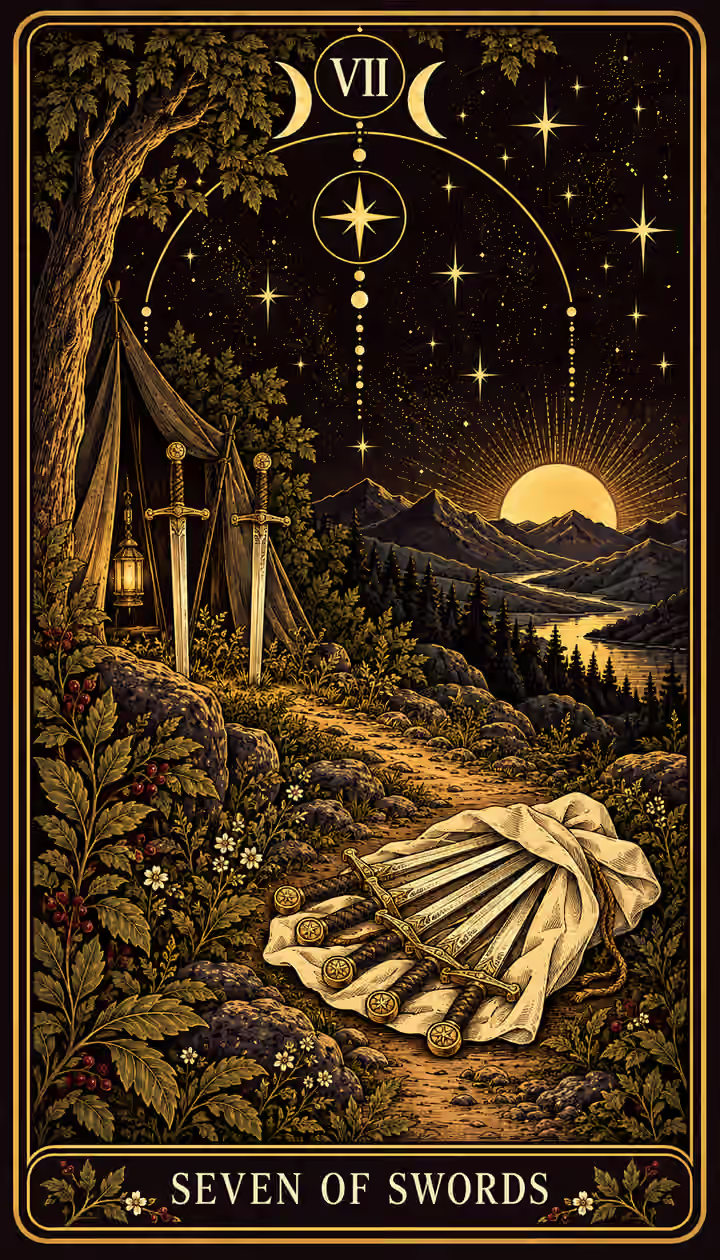
Seven of Swords from the Gilded Garden deck
The Gilded Garden · Upright

SWORDS · SEVEN

Seven of Swords

Doing it your own way: impulse, evasion, and deception, more playful than malicious.

AirNumber seven

UPRIGHT

Independence, impulsiveness, evasion

REVERSED

Getting caught, slander, gossip

Draw the Seven of Swords into a reading

THE MEANING

What does the Seven of Swords mean in tarot?

The Seven of Swords is a Minor Arcana card in the suit of Swords, linked with Air. Upright, it describes going your own way: independence, strategy and evasion, sometimes shading into secrecy or deception. Reversed, the Seven of Swords suggests things coming to light, from gossip and exposed shortcuts to a brave face that no longer hides how unsettled you feel.

Is the Seven of Swords a positive card?

The Seven of Swords is a mixed card. Its gift is resourcefulness and independent thinking. Its caution concerns evasion and half-truths, and reversed, it suggests that candour now costs less than concealment later.

Is the Seven of Swords a yes or no card?

Upright: leans noReversed: not yet

The Seven of Swords leans no when it falls upright, because it describes evasion, shortcuts and things kept hidden. A yes reached that way tends to be fragile, and the card asks whether the plan depends on something left unsaid. Reversed, the Seven of Swords leans toward not yet: what was concealed is surfacing, and honesty or restitution may need to come before the matter can settle.

SEVEN OF SWORDS AT A GLANCE
ArcanaMinor Arcana
SuitSwords (Air)
Number7
Uprightindependence, impulsiveness, evasion, deception
Reversedgetting caught, slander, gossip, pretending to cope

UPRIGHT AND REVERSED

Two ways the Seven of Swords can fall

A reversed card is read as blocked, inward or delayed energy, never simply as its opposite.

AS IT FALLS

The Seven of Swords upright

Upright, the Seven of Swords describes someone who prefers to work outside the rules. There is independence in it, and often real cleverness, but also a readiness to slip away from consequences or responsibilities. The card can point to evasion, a quiet exit from something you would rather not face, or to secrecy and deception, whether yours or someone else’s. Its tone is usually more mischievous than malicious: white lies, improvised shortcuts, a little showmanship. Feeling like an outsider can drive it, and that feeling can harden into a defiant identity. The Seven of Swords asks you to look at the tactics you are using. Strategy can be a real strength, and the card suggests keeping it, while noticing where independence has slid into dodging, and where honesty would serve you better than cleverness.

  • independence
  • impulsiveness
  • evasion
  • deception
  • strategy
  • outsider
  • getting away with it
AS ADVICE
Be strategic, but stay honest.
AS A CHALLENGE
Shortcuts with consequences you’re ignoring.

TURNED OVER

The Seven of Swords reversed

Reversed, the Seven of Swords suggests that what was hidden is surfacing. Shortcuts tend to be discovered, and the card hints that anything underhanded is unlikely to stay quiet for long. It can also describe gossip or unfair talk circulating around you, a reason to be thoughtful about how your conduct appears to others. Sometimes the reversal is more personal: a show of having everything in hand while, beneath it, you feel insecure or stretched. In other readings it points to restitution, something returned or made right. The reversed Seven of Swords is not a punishment card. What it points toward is coming clean before matters are forced into the open, and letting go of a performance of coping that costs more energy than honesty would.

  • getting caught
  • slander
  • gossip
  • pretending to cope
  • sabotage
  • reparations
AS ADVICE
Come clean before you’re found out.
AS A CHALLENGE
A façade of coping is hiding real instability.

IN YOUR LIFE

The Seven of Swords in love, work and the inner life

The Seven of Swords in love

The Seven of Swords in love can describe secrecy, evasion or a reluctance to be fully known, which may say as much about fear as about intent. Reversed, the Seven of Swords suggests truths coming out and the chance to rebuild trust through openness rather than careful management.

The Seven of Swords at work

The Seven of Swords in work points toward independent strategy, working around obstacles or, at times, someone cutting corners to get ahead. Reversed, the Seven of Swords can describe office gossip, shortcuts being noticed, or the quiet strain of appearing in control while feeling far from it.

Seven of Swords by area of life, upright and reversed
UPRIGHTREVERSED
Love and relationshipsUPRIGHTSecrecy or evasion in a relationship.REVERSEDTruth coming out.
Work and purposeUPRIGHTStrategic independence; or someone cutting corners.REVERSEDGetting caught; office gossip.
The inner lifeUPRIGHTIndependence of mind.REVERSEDA brave face over insecurity.

THE GILDED GARDEN

The Seven of Swords in this deck

In the Gilded Garden deck, the Seven of Swords shows a canvas tent beneath a tree at night, a lantern glowing inside and two swords planted upright beside the entrance. On the path in front lie five more swords, bundled in a pale cloth tied with rope, as if someone has gathered them and stepped away. No one is in sight. The path winds off toward a river valley and a rising sun.

IN A SPREAD

How to read the Seven of Swords in a spread

In the present position, the Seven of Swords often describes a situation handled quietly or on your own terms. As a challenge, it can point to shortcuts with ignored consequences. As advice, it asks you to be strategic but stay honest. Near an outcome, it suggests that hidden matters may surface. Among other Swords, the Seven of Swords draws attention to what is not being said.

TO SIT WITH

What would happen if you did this openly?

What are you pretending to have under control?

KINDRED CARDS

How the Seven of Swords differs from similar cards

IN THE LIBRARY

IN A READING

A meaning is where a reading begins.

In a spread, the Seven of Swords speaks through its position, its neighbours and the question you bring. The companion shows you how, and why.

Get the iPhone app

About these meanings: they are written by the TarotSeeker editors from the traditional Rider–Waite–Smith meanings and the Golden Dawn correspondences, read through the elemental method the companion uses in readings. They are starting points for reflection, never predictions.