Five of Swords from the Gilded Garden deck
The Gilded Garden · Upright

SWORDS · FIVE

Five of Swords

A hollow victory: unfair advantage, resentment, and allies lost.

AirNumber five

UPRIGHT

Unfair advantage, hollow victory, resentment

REVERSED

Defeat, walk away, contrition

Draw the Five of Swords into a reading

THE MEANING

What does the Five of Swords mean in tarot?

The Five of Swords is a Minor Arcana card in the suit of Swords, linked with Air. Upright, it describes a hollow victory: a contest won through unfair advantage or excessive force, at the cost of goodwill and allies. Reversed, the Five of Swords suggests walking away from a losing fight, accepting a small defeat, or making amends for past wrongs.

Is the Five of Swords a positive card?

The Five of Swords is generally a cautionary card. Its gift is the clarity to see when a contest is no longer worth having. Its caution concerns hollow wins and lost allies, and reversed, it favours amends or a graceful exit.

Is the Five of Swords a yes or no card?

Upright: leans noReversed: leans no

The Five of Swords leans no when it falls upright, because it describes a hollow victory: a contest won at the cost of goodwill and allies. A yes may be within reach, but the card asks what taking it would cost. Reversed, the Five of Swords also leans no, this time to the fight itself, favouring a graceful exit, a conceded point or amends. Here a no is often the wiser way out.

FIVE OF SWORDS AT A GLANCE
ArcanaMinor Arcana
SuitSwords (Air)
Number5
Uprightunfair advantage, hollow victory, resentment, spite
Reverseddefeat, walk away, contrition, penance

UPRIGHT AND REVERSED

Two ways the Five of Swords can fall

A reversed card is read as blocked, inward or delayed energy, never simply as its opposite.

AS IT FALLS

The Five of Swords upright

Upright, the Five of Swords describes winning in a way that leaves a sour taste. Someone has come out ahead, but through cutting corners, scoring points or using far more force than the situation required, and the people around them have quietly withdrawn. The card can show you on either side of this: as the one pressing an advantage, or as the one being outmanoeuvred. Beneath it there is often resentment, a sense of having started from behind, and an unspoken wish to be accepted that the conduct itself undermines. The Five of Swords asks a simple question about any conflict you are in: what would this victory cost? It points toward weighing that price honestly, and toward noticing when the urge to win has outgrown the thing worth winning.

  • unfair advantage
  • hollow victory
  • resentment
  • spite
  • winning at a cost
  • deception
  • overkill
AS ADVICE
Ask what winning this way will cost.
AS A CHALLENGE
Resentment is driving the fight.

TURNED OVER

The Five of Swords reversed

Reversed, the Five of Swords suggests that the wiser move is to concede a minor point and step out of the conflict before it grows. Pride may be urging you to keep fighting, but the card hints that distance protects more than victory would. The reversal can also describe contrition: recognising where you have treated others unfairly and looking for ways to set it right. In some readings, it shows the person who was taken advantage of finally walking away, choosing peace over vindication. The reversed Five of Swords is less about losing than about refusing a contest that has no good ending. What it points toward is accepting a small loss gracefully, repairing what can be repaired, and leaving the rest behind without carrying the grudge forward.

  • defeat
  • walk away
  • contrition
  • penance
  • the wronged party leaving
AS ADVICE
Make amends, or walk away.
AS A CHALLENGE
Pride keeps you in a losing fight.

IN YOUR LIFE

The Five of Swords in love, work and the inner life

The Five of Swords in love

The Five of Swords in love can describe point-scoring, where winning the argument matters more than staying close. It suggests asking what the fight is really about. Reversed, the Five of Swords points toward apology and amends, or toward stepping away from a dynamic that keeps leaving one person diminished.

The Five of Swords at work

The Five of Swords in work points toward cut-throat competition, credit taken unfairly or a contest where the winner loses respect. It asks whether the tactics fit the goal. Reversed, the Five of Swords can describe leaving a toxic rivalry, or mending working relationships after a conflict went too far.

Five of Swords by area of life, upright and reversed
UPRIGHTREVERSED
Love and relationshipsUPRIGHTPoint-scoring; winning arguments and losing closeness.REVERSEDWalking away; making amends.
Work and purposeUPRIGHTCut-throat competition; credit taken unfairly.REVERSEDLeaving a toxic contest.
The inner lifeUPRIGHTResentment.REVERSEDContrition.

THE GILDED GARDEN

The Five of Swords in this deck

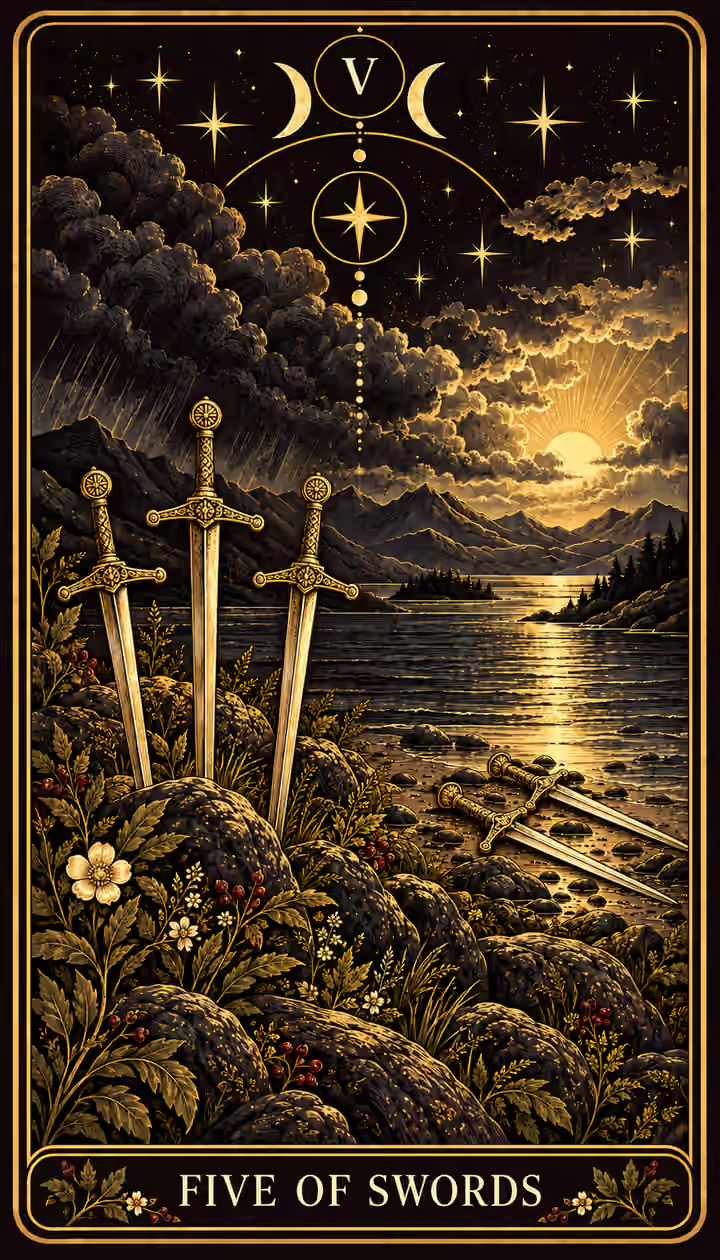
In the Gilded Garden deck, the Five of Swords shows no figures at all, only what a struggle leaves behind. Three swords stand upright among mossy rocks on a lakeshore, while two more lie abandoned on the wet pebbles at the water’s edge. Rain still falls from dark clouds on one side, but the sun breaks through on the other, suggesting that the storm is passing and the cost is now plain to see.

IN A SPREAD

How to read the Five of Swords in a spread

In the present position, the Five of Swords often describes a conflict where the price of winning is rising. As a challenge, it can point to resentment driving the fight. As advice, it asks you to consider what this victory would cost. Near an outcome, it suggests a result that may feel empty. Among other Swords, the Five of Swords sharpens themes of rivalry and pride.

TO SIT WITH

If you won this, what would you have lost?

Where did the resentment begin?

KINDRED CARDS

How the Five of Swords differs from similar cards

IN THE LIBRARY

IN A READING

A meaning is where a reading begins.

In a spread, the Five of Swords speaks through its position, its neighbours and the question you bring. The companion shows you how, and why.

Get the iPhone app

About these meanings: they are written by the TarotSeeker editors from the traditional Rider–Waite–Smith meanings and the Golden Dawn correspondences, read through the elemental method the companion uses in readings. They are starting points for reflection, never predictions.