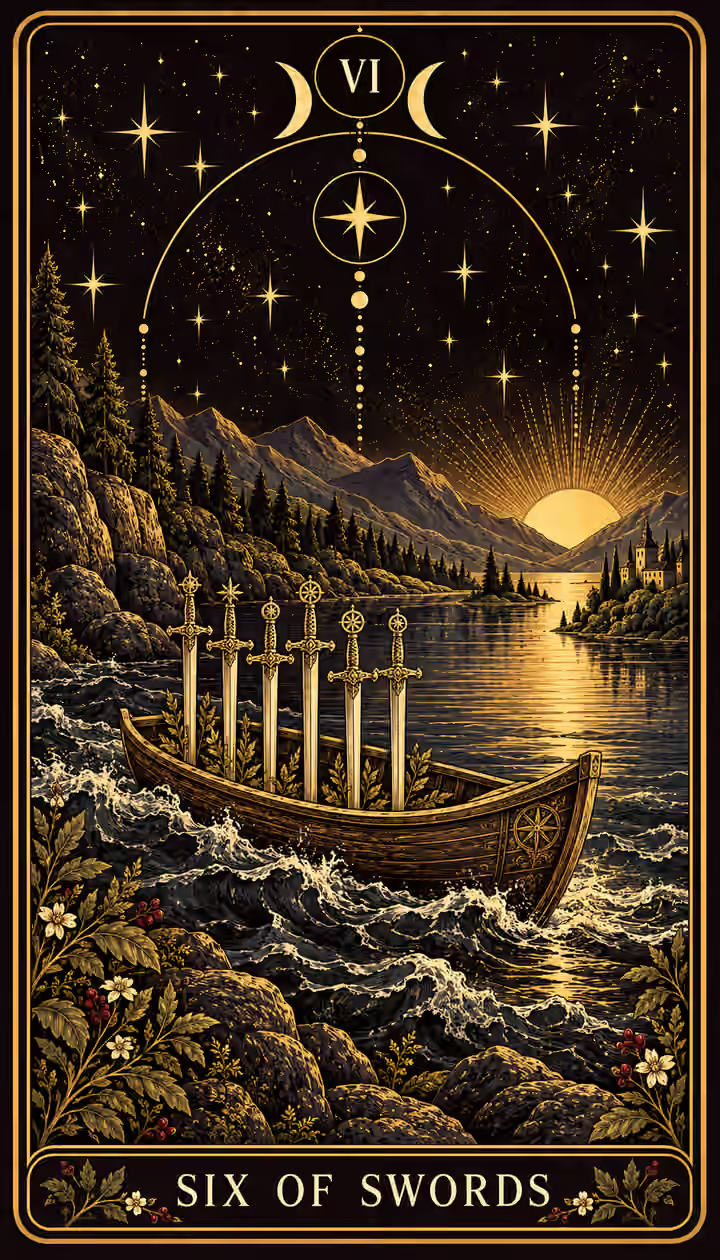
Six of Swords from the Gilded Garden deck
The Gilded Garden · Upright

SWORDS · SIX

Six of Swords

Passage to calmer waters, carrying your baggage with you.

AirNumber six

UPRIGHT

Transition, journey, moving on

REVERSED

Journey postponed, trapped, unresolved pain

Draw the Six of Swords into a reading

THE MEANING

What does the Six of Swords mean in tarot?

The Six of Swords is a Minor Arcana card in the suit of Swords, linked with Air. Upright, it stands for transition: leaving a hard period behind and moving toward calmer circumstances, sometimes through travel or relocation. Reversed, the Six of Swords suggests a passage delayed, or the sense of being held where old pain lingers until it has been faced.

Is the Six of Swords a positive card?

The Six of Swords is a gently positive card, a sign of movement toward better times. Its caution is that what you carry comes with you, and reversed, it asks you to face lingering pain before the way forward fully opens.

Is the Six of Swords a yes or no card?

Upright: leans yesReversed: not yet

The Six of Swords leans yes when it falls upright, because it describes a crossing toward calmer conditions, a quiet move away from what was hard. The yes is gentle rather than triumphant, and some old hurt may travel with you. Reversed, the Six of Swords leans toward not yet: the passage is delayed, or pain left unfaced keeps you anchored. The card suggests using the wait to tend what still aches.

SIX OF SWORDS AT A GLANCE
ArcanaMinor Arcana
SuitSwords (Air)
Number6
Uprighttransition, journey, moving on, leaving hardship
Reversedjourney postponed, trapped, unresolved pain, delays in travel

UPRIGHT AND REVERSED

Two ways the Six of Swords can fall

A reversed card is read as blocked, inward or delayed energy, never simply as its opposite.

AS IT FALLS

The Six of Swords upright

Upright, the Six of Swords describes a crossing from rough conditions toward smoother ones. It often marks a decision to cut your losses and move on, whether that means leaving a situation, changing direction, or literally travelling somewhere new. The move is rarely triumphant; it is quiet, steady and a little weary. You may be bringing some of the old hurt along with you, packed among everything else, and the card is honest about that. Still, its overall direction is hopeful. The water ahead is calmer than the water behind, and each stretch of the passage puts more distance between you and what was hard. The Six of Swords asks you to keep moving, and to consider which burdens you can set down along the way rather than carry to the far shore.

  • transition
  • journey
  • moving on
  • leaving hardship
  • travel
  • recovery
  • cutting losses
AS ADVICE
Move on, and set some baggage down on the way.
AS A CHALLENGE
Running from rather than resolving.

TURNED OVER

The Six of Swords reversed

Reversed, the Six of Swords suggests that the crossing is stalled. A planned move or journey may be postponed, or the way out of a difficult situation is not yet open. You might feel anchored to the place where something painful happened, wanting to leave but unable to. Sometimes the reversal describes an attempt to move on that did not quite work, because the old hurt came along unresolved. The reversed Six of Swords does not suggest you are stuck forever. It points toward the idea that some pain needs to be faced where it is before you can truly leave it. Outer delays may be part of the picture, but the card invites you to use the waiting well, tending what still aches so that, when the passage opens, you travel lighter.

  • journey postponed
  • trapped
  • unresolved pain
  • delays in travel
  • baggage
AS ADVICE
Face the pain where you are; then you can go.
AS A CHALLENGE
Unresolved hurt is keeping you in place.

IN YOUR LIFE

The Six of Swords in love, work and the inner life

The Six of Swords in love

The Six of Swords in love can describe moving on from a painful chapter, or a relationship entering calmer water after a difficult period. Reversed, the Six of Swords suggests that old hurts are still close to the surface, and that healing them may matter more than leaving them behind.

The Six of Swords at work

The Six of Swords in work points toward a transition into a better role, a change of team, or travel connected with your work. Reversed, the Six of Swords can describe a stalled transition, a move that keeps being deferred, or unresolved frustration that follows you into each new setting.

Six of Swords by area of life, upright and reversed
UPRIGHTREVERSED
Love and relationshipsUPRIGHTMoving on from a painful relationship.REVERSEDUnable to leave old pain behind.
Work and purposeUPRIGHTTransition to a better role; travel for work.REVERSEDStalled transition.
The inner lifeUPRIGHTHealing in motion.REVERSEDStuck in grief.

THE GILDED GARDEN

The Six of Swords in this deck

In the Gilded Garden deck, the Six of Swords shows a wooden boat carrying six upright swords nestled among green branches. There is no ferryman and no passenger; the swords themselves are the cargo. The boat breaks through white-capped waves in the foreground, while ahead the lake turns smooth and golden beneath a rising sun, a small town glimpsed on the far shore. The contrast between the two waters carries the card’s meaning.

IN A SPREAD

How to read the Six of Swords in a spread

In the present position, the Six of Swords often describes a transition already underway. As a challenge, it can point to running from a problem rather than resolving it. As advice, it asks you to move on and set down what you no longer need. Near an outcome, it suggests calmer circumstances ahead. Beside other Sixes or Cups, the Six of Swords tends to emphasise emotional healing.

TO SIT WITH

What are you carrying that you could leave on the far shore?

What must be faced before you can move on?

KINDRED CARDS

How the Six of Swords differs from similar cards

IN THE LIBRARY

IN A READING

A meaning is where a reading begins.

In a spread, the Six of Swords speaks through its position, its neighbours and the question you bring. The companion shows you how, and why.

Get the iPhone app

About these meanings: they are written by the TarotSeeker editors from the traditional Rider–Waite–Smith meanings and the Golden Dawn correspondences, read through the elemental method the companion uses in readings. They are starting points for reflection, never predictions.